The Shoulder
instability
Dynamic factors (stability through contractile structures)
Muscles of the shoulder girdle
Trapezius, rhomboideus , latissimus dorsi, serratus anterior and levator scapulae stabilize the de scapula as a firm platform for movement of the humeral head.
The 'rotator cuff'
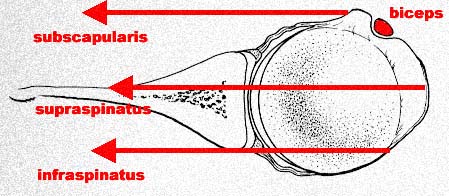
Supraspinatus, Infraspinatus, Subscapularis and the long head of the Biceps
The cuff muscles serve three stabilizing functions:
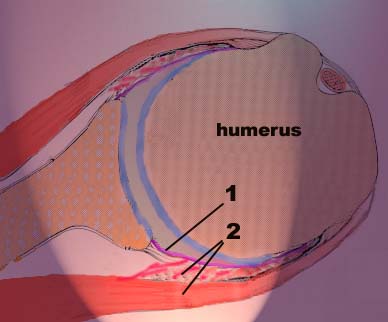
- Dynamic ligaments. By virtue of the blending of their tendons with the glenohumeral capsule and ligaments, selective contraction of the cuff muscles can adjust the tension in these structures, producing "dynamic" ligaments.
- contracting together, the rotator cuff muscles and the biceps press the humeral head into the glenoid fossa, locking it into position and thus providing a secure scapulohumeral link for upper extremity function.
- contracting selectively, the rotator cuff muscles can resist displacing forces resulting from contraction of the principal shoulder motors.
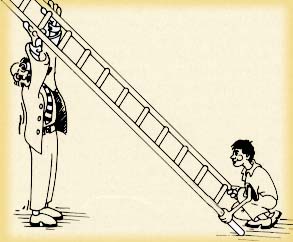
- When the pectoralis major and anterior deltoid muscles elevate and flex the shoulder, they tend to push the humeral head out the back of the glenoid fossa; this displacement is resisted by contraction of the subscapularis, infraspinatus, and teres minor muscles.
- when the lateral deltoid initiates shoulder abduction, the supraspinatus and the long head of the biceps actively resist upward displacement of the humeral head relative to the glenoid fossa.
| [Start] | [Main shoulder] | [Flowcharts shoulder] | [A System of Orthopaedic Medicine] |
Copyright © 2021 DR. L. OMBREGT All Rights
Reserved
The author can not be held responsible for any damage caused by the use of any information provided.